
Rebuilding a Critical Corridor: How Four New Interchanges Transformed Bangerter Highway
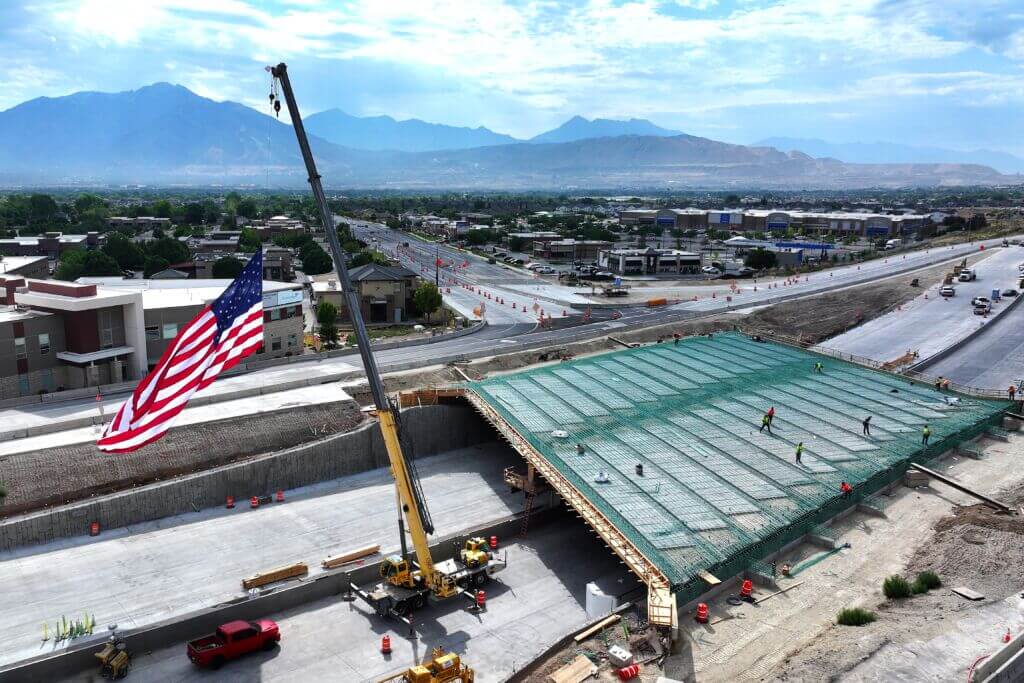
For years, the traffic signals along Bangerter Highway were predictable choke points for tens of thousands of commuters. The stop-and-go pattern at 4700 South, 2700 West, 9800 South, and 13400 South caused backups across the western Salt Lake Valley, signaling a transportation system struggling to keep pace with rapid growth. As development surged, so did the urgency for an enduring mobility solution.
That effort has now been recognized statewide, earning the project the AGC of Utah’s Overall Transportation/Utility Infrastructure Project of the Year. A reflection of its scale, complexity, and long-term value to Utah’s communities.
“It was rewarding and challenging at the same time,” reflected Derek Harames, Project Manager for the Ralph L. Wadsworth/W.W. Clyde Joint Venture. “Each day presented a new achievement and a new issue to be resolved. We’ve been part of Bangerter projects for years, but we’ve never faced anything quite like this.”
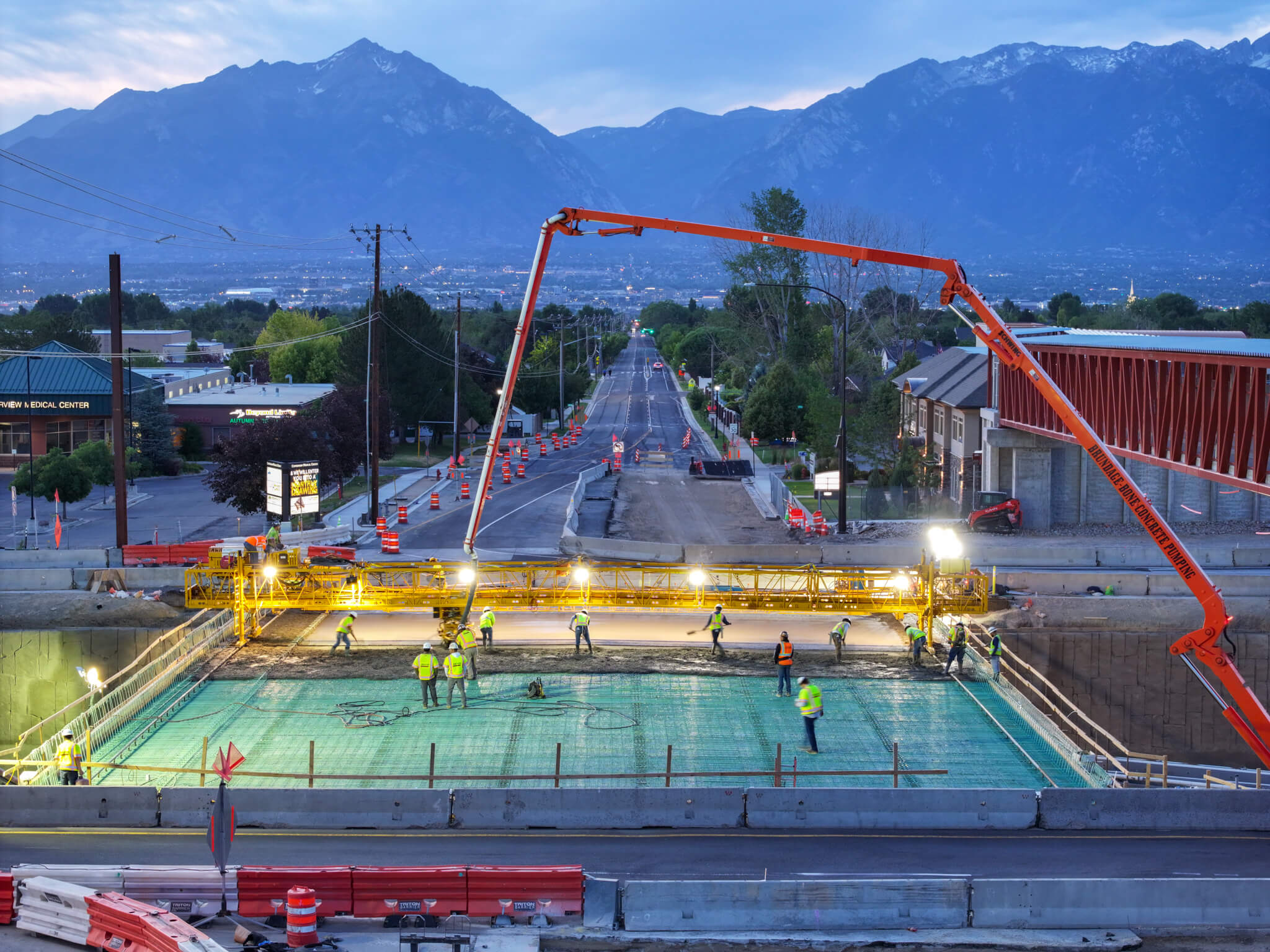
UDOT’s initiative to replace four signalized intersections with grade-separated, freeway-style interchanges became one of the most transformative corridor improvements in state history. Through two concurrent contracts, the RLW/W.W. Clyde team delivered a continuous free-flow corridor from 4700 South to I-15, cutting commute times by as much as 20 minutes and preparing the highway for traffic volumes expected to double by 2050.
Each interchange introduced a tailored solution: a tight-diamond interchange and new pedestrian bridge at 9800 South, high-efficiency SPUIs at 13400 South and 4700 South, and a grade-separated configuration at 2700 West. Together, they eliminate bottlenecks, improve safety, and expand long-term access for West Valley City, Taylorsville, South Jordan, Riverton, and Bluffdale.
“This project resolved an issue that had been looming for many years,” Harames said. “People can now travel the corridor without stopping at a single light.”
Long before construction began, the team tackled what would become one of the defining challenges of the project: extensive utility relocations. Early planning reduced the construction footprint, avoided property impacts, and saved valuable time.
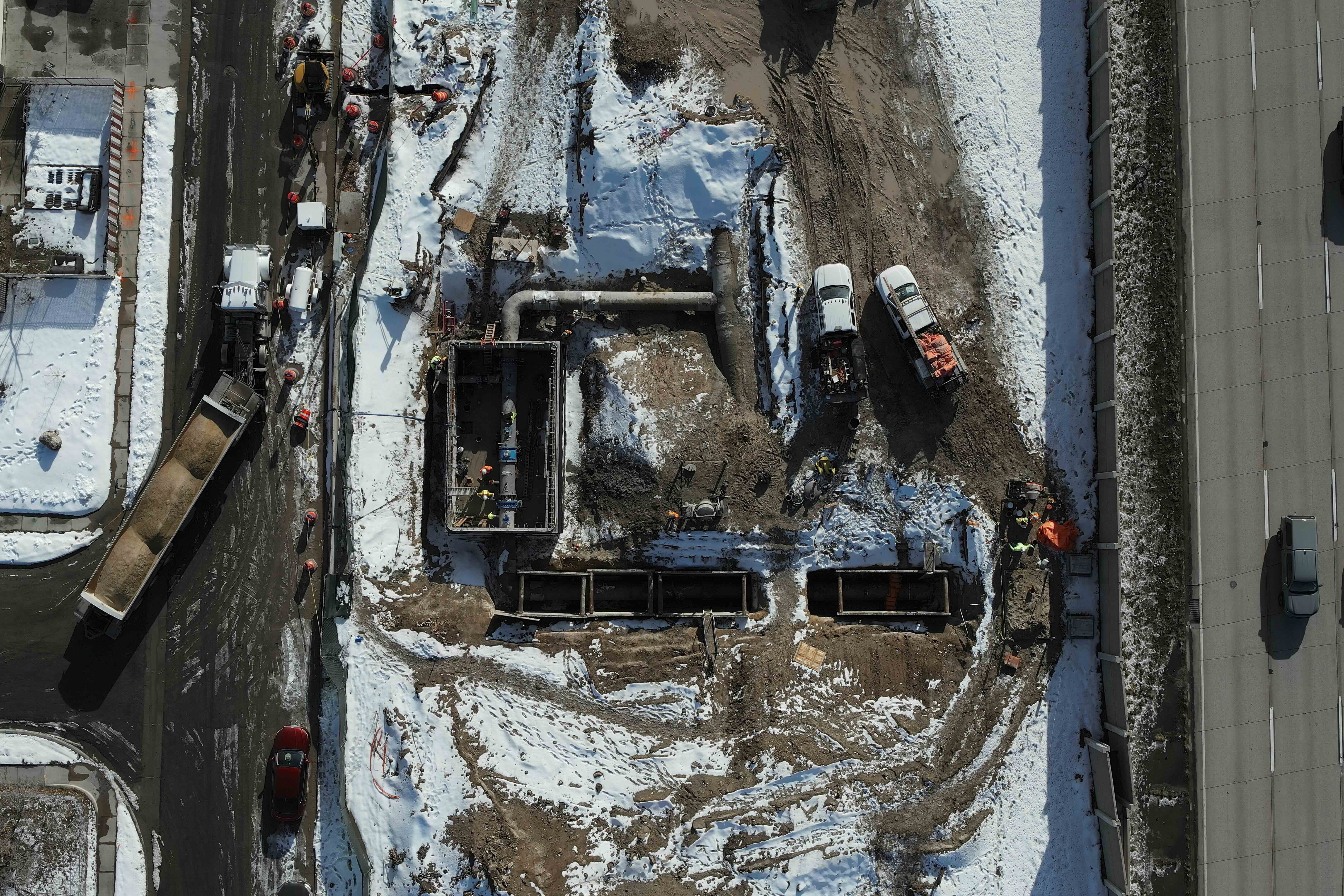
At 9800 South, the original sewer alignment called for jack-and-boring under homes and commercial properties. The team identified a new path within UDOT’s right-of-way, eliminating the operation and avoiding impacts to 20 homes, a dentist office, and a bank. At 4700 South, utilities located on a private road serving a condo development were moved out of the neighborhood and placed in UDOT ROW near the hospital, preserving access and simplifying sequencing.
“Utility corridors were evaluated early to determine the best relocation path,” Harames said. “It minimized impacts and kept the project moving.”
One of the project’s most challenging engineering moments came when soils at multiple locations proved unsuitable for the planned jack-and-bore installations. The work required placing 400-foot casings under Bangerter with extremely tight grade tolerances, conditions the existing soils wouldn’t support.
Rather than lose months to redesign, UDOT and RLW/W.W. Clyde collaborated on a bold alternative: open-cut the highway over a single weekend.
What followed became known as the “Weekend Blitzes.”
“Both teams shifted gears and executed the plan,” Harames said. “We opened the trench Friday night and had everything restored before Monday morning traffic.”
Across three separate weekends, crews worked around the clock to excavate trenches more than 22 feet deep, install steel casings up to 42 inches in diameter, backfill the roadway, and reopen the highway without delaying commuters. The speed, precision, and coordination prevented what could have been major schedule setbacks.
At 4700 South, a 66-inch aqueduct relocation required meticulous fabrication and alignment to maintain watertight integrity under strict tolerances. At 13400 South, the team redesigned a multi-phase box culvert into a precast solution and collapsed two phases into one by shifting traffic strategically, saving roughly four weeks in the schedule.
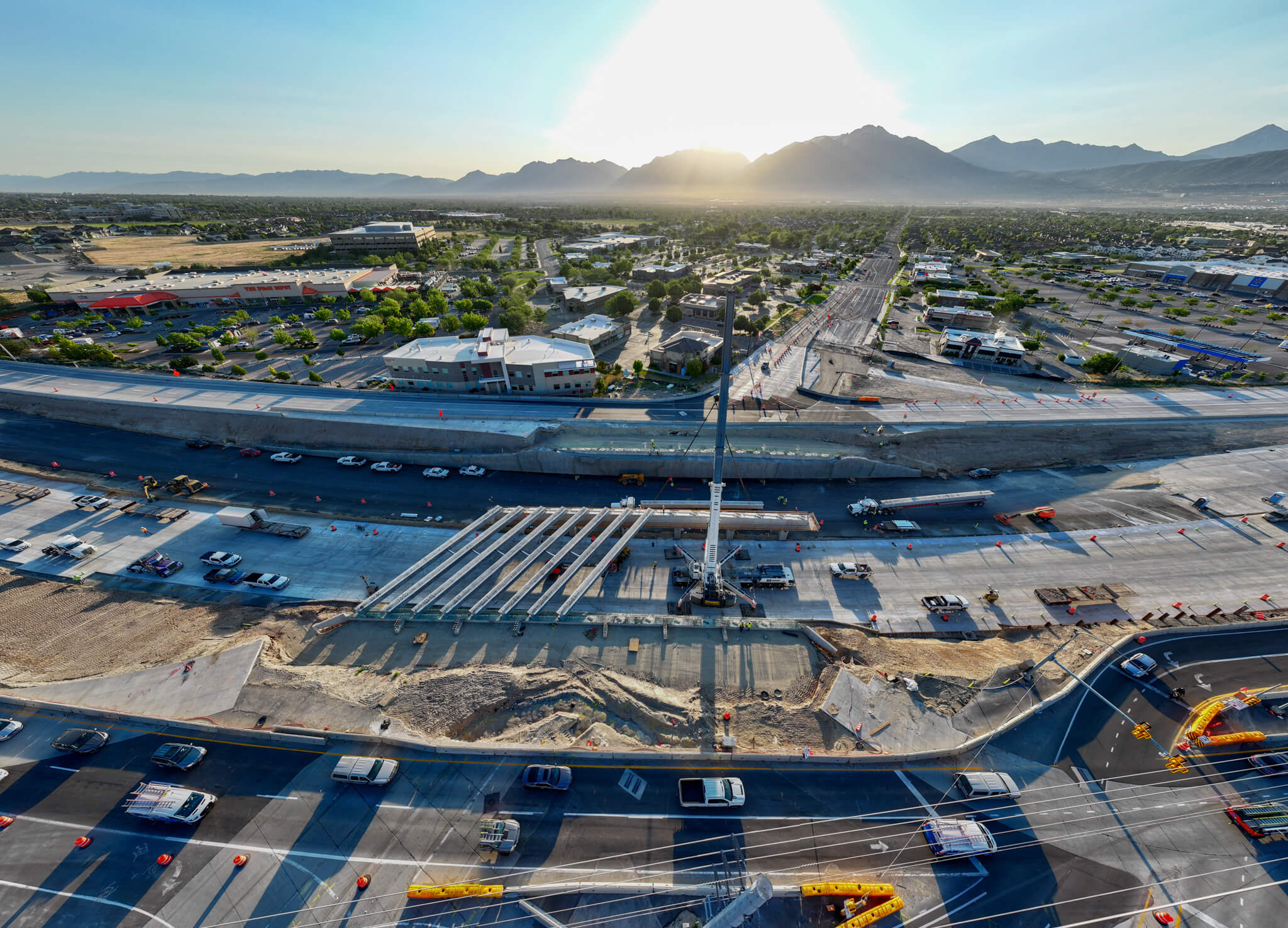
Innovation extended to materials as well. The team crushed existing Bangerter pavement onsite, recycling the 10- to 14-inch slabs into granular borrow for the new highway. The approach reduced trucking, minimized waste, and directly supported sustainability goals.
Architectural finishes, landscaped medians, and improved pedestrian facilities complete each interchange, blending long-term mobility improvements with community-focused design.
With more than 60,000 vehicles per day moving through active work zones, safety demanded exceptional planning. The RLW/W.W. Clyde team logged more than 327,000 manhours with zero lost-time incidents, a remarkable achievement that underscores the strength of their program.
Daily TEAM safety meetings, monthly all-hands briefings, specialized training sessions, and controlled access points kept crews and the public protected. Pedestrian safety received special attention, especially at 9800 South, where a new bridge provides a secure connection between neighborhoods and nearby schools.
Weekly coordination meetings brought UDOT, the design team, utilities, and city partners together to maintain alignment from start to finish. Harames credits UDOT Project Director Marwan Farah for championing transparency and fostering a project-first culture.
“The cities and utility owners were great to work with, and every decision was made with the goal of delivering a safe, high-quality project on time,” he said.
Despite its complexity, the project finished on schedule, and even early. Harames attributes that success to unity of purpose.
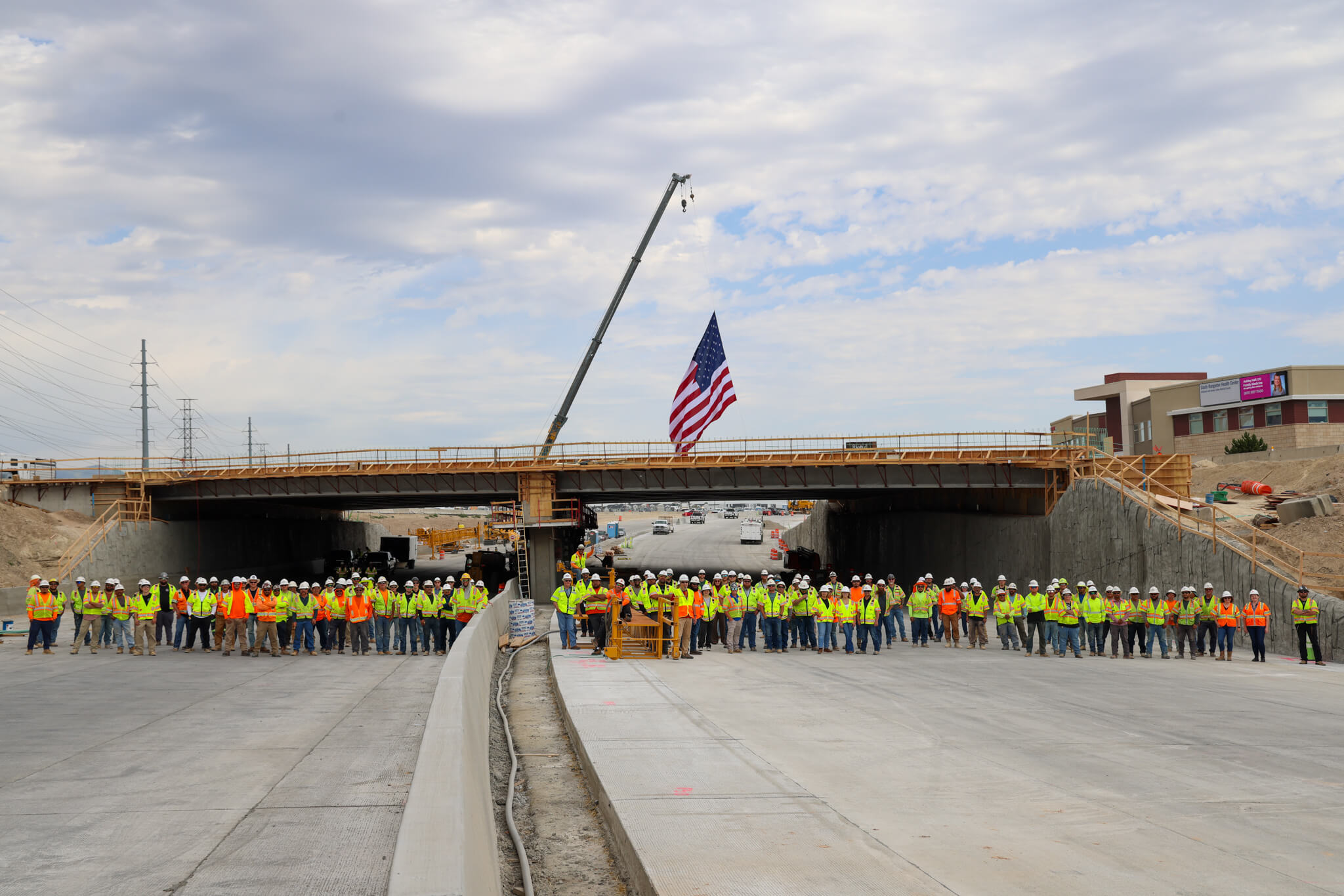
“Our team faced adversity head on,” he said. “No matter how hard it got, the team kept moving forward. That’s what makes me proud.”
The benefits of the project extend far beyond improved traffic flow. By eliminating the final signals along the corridor, the new interchanges shorten commutes, enhance east–west connections, reduce emissions, and strengthen access to schools, hospitals, and commercial centers. The improvements also advance regional safety, particularly for students crossing at 9800 South.
As the west side continues to grow at record speed, the reconstructed Bangerter Highway stands as essential infrastructure, delivering mobility today and creating capacity for tomorrow.
“This project improves mobility and safety in ways the public will feel every single day,” Harames said. “That’s the biggest win.”